


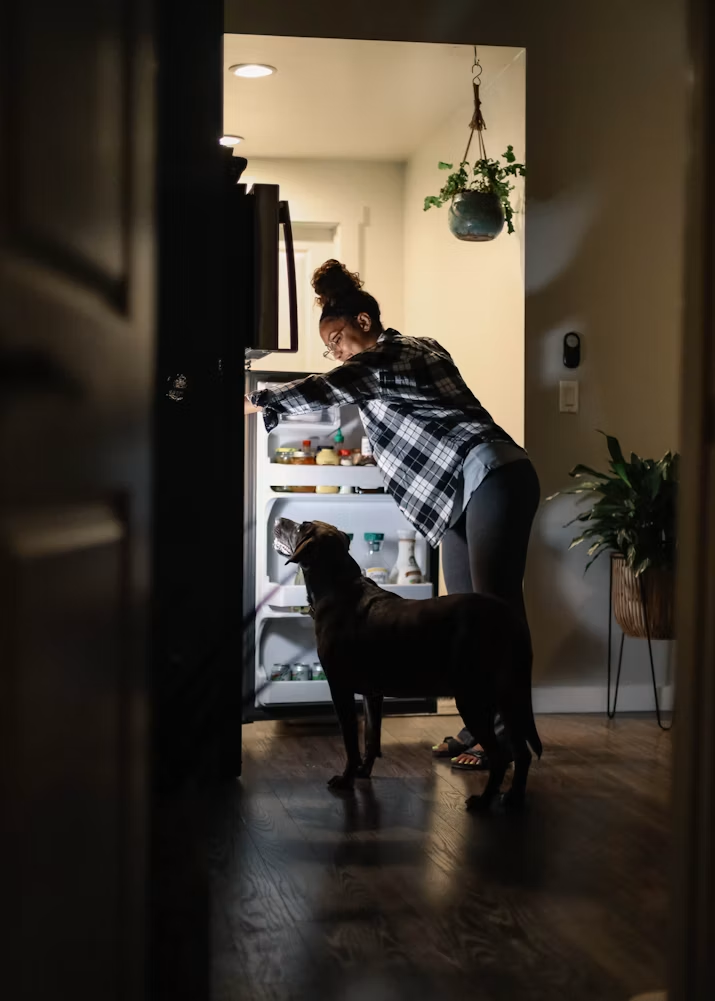




Binge Eating Disorder (BED)

What Is Binge Eating Disorder?

Overeating can be understood as existing on a spectrum. The entire spectrum has the potential to cause psychological and physical health problems, however, not all overeating behavior rises to the level of a diagnosable mental health condition.

On one end of the spectrum we have mindless eating, or eating out of habit when you're not truly hungry (think eating popcorn on autopilot simply because you're in a movie theater). In the middle is emotional eating, or using food when not physiologically hungry to temper a variety of emotional states, like stress, sadness, boredom, and even joy. At the farthest end of the spectrum is Binge Eating Disorder (BED), a formal clinical diagnosis in which an individual feels a marked loss of control as they eat an objectively large amount of food in a distinct period of time.

Clinical binge eating is not the same as overeating by choice, with a sense of being in control of your choices. Binge eating feels like there is no choice, or like you are being compelled to eat. It doesn't feel like an empowered, deliberate decision to go back for more during a festive holiday. By definition, diagnosable binge eating is a regular occurrence over several months in which one feels out of control and significantly distressed by their behavior. Binge eaters usually feel intense guilt and shame, which then leads to more binging. And on goes the cycle....

To receive a formal diagnosis of BED, a person would not regularly use strategies to compensate, or to attempt to "erase the damage" through means like induced vomiting, overexercising, restricting food, or misusing laxatives. If compensatory measures are regularly used after a binge, a diagnosis of Bulimia may be more appropriate. Specialized care often includes DBT for binge eating. Request a consultation to discuss next steps.

Understanding Binge Eating Disorder

Recurrent episodes of binge eating. An episode of binge eating is characterized by both of the following:

  • Eating, in a discrete period of time (e.g. within any 2-hour period), an amount of food that is definitely larger than most people would eat during a similar period of time and under similar circumstances.
  • A sense of lack of control over eating during the episode (e.g. a feeling that one cannot stop eating or control what or how much one is eating).
  • The binge eating episodes are associated with three or more of the following: eating much more rapidly than normal; eating until feeling uncomfortably full; eating large amounts of food when not feeling physically hungry; eating alone because of feeling embarrassed by how much one is eating; feeling disgusted with oneself, depressed or very guilty afterward.
  • Marked distress regarding binge eating is present.
  • Binge eating occurs, on average, at least once a week for three months.
  • Binge eating not associated with the recurrent use of inappropriate compensatory behaviors as in Bulimia Nervosa and does not occur exclusively during the course of Bulimia Nervosa, or Anorexia Nervosa methods to compensate for overeating, such as self-induced vomiting.

Emotional Eating

Compassionate Help for Stress Eating

It's not easy to break longstanding patterns but it is possible with sensitive support. With skilled help, you can learn to keep your promises to yourself while being gentle with your mistakes. You can learn healthy ways to manage your stress so you can stop turning to food to check out and feel better. Get help for emotional and binge eating in a non-judgmental environment where you can be yourself as you take steps towards healthy goals.

Understanding Emotional Eating

Emotional eating is something most people do periodically. We eat to celebrate happy occasions and many people use food to cope when they're feeling down.

Emotional eating is not the same as eating for true physical hunger, as the consumption of food serves a different purpose, often one of helping us alter how we feel psychologically. We are looking for a boost in positive feelings and/or looking to avoid or turn down the volume on negative feelings. For many people, food has a very predictable and highly rewarding quality that reinforces using it as a coping tool.

When we eat to alter our emotional state we often do so without full awareness. We may seek out food after a stressful day at work or with the kids without knowing that we aren't actually physically hungry. When we stress eat we are attempting to feed an emotional hunger or trying to block out uncomfortable feelings like sadness, anxiety, boredom, shame, rejection, mental exhaustion, and general overwhelm from our busy lives.

Binge & emotional eating struggles | Ventura, CA

Food can feel like the only way to cope when emotions run high.

Certain foods can produce strong urges to consume and it feels like we can't stop despite the negative consequences.

Compassionate care | Ventura, CA

Empowering skills to heal your relationship with food.

Learn practical tools to manage intense emotions and stop out-of-control eating with a clear structured approach grounded in your goals.

Get Help for Binge Eating & Emotional Eating

Need help on your health journey? Schedule a consultation to discuss your concerns and learn more about the DBT protocol used in treatment.

I have a serious love for and problem with sugar: If I start eating it, I sometimes can't stop. I don't have an off switch, any more than I do with alcohol.
Anne Lamott

Strategies for Managing Binge Eating

Therapy for Food Addiction in Ventura and Online in California

Some people can effectively moderate their consumption of sugary, starchy, and ultra-processed foods while others cannot. This phenomenon is similar to substances like alcohol.

Many people can enjoy one glass of wine and put the rest of the bottle away. They can have full bottles of wine in the cupboard with zero temptation to open them. People with alcoholism are not able to do this. They would be unable to resist alcohol in the house. For people with food addiction, pie may be the drug of choice. Or chips. Or fries. Maybe it's pizza. The actual food will vary but it's usually a food the body finds highly rewarding due to its texture and high sugar or high fat content. People with food addiction aren't able to moderate their consumption of particular foods. They don't have an off switch around their trigger foods, leading to a cycle of binge and shame.

While "food addiction" remains a debated term in the field, many people search for help using that language—and treatment focuses on stopping compulsive behavior and building healthier coping skills rather than shame-based dieting.

OCD & Eating Disorders

The Connection Between OCD and Binge Eating Disorder

Obsessive-Compulsive Disorder (OCD) and eating disorders (ED) have significant rates of co-occurrence and many overlapping traits. While OCD and ED are currently classified as separate disorders, interestingly, there is so much similarity between the obsessive-compulsive qualities of OCD and ED, some experts think they are part of an OCD Spectrum and sufferers may benefit from similar exposure-based treatment approaches.

Licensed Therapist

Hi, I'm Teva Johnstone, LCSW

I'm a Licensed Clinical Social Worker and the founder of Ventura OCD Therapy. I offer DBT for Binge Eating Disorder and emotional eating, drawing on my extensive experience helping people with OCD stop compulsive behavior while reducing anxiety.

  • DBT adapted for Binge Eating Disorder and emotional eating
  • Experience treating compulsive behavior and OCD Spectrum conditions
  • Trauma-informed, consent-based, and collaborative care
  • In-person in Ventura or HIPAA-compliant telehealth in California

FAQs

Frequently Asked Questions About Binge Eating & Emotional Eating Therapy

Articles and News

Recent Blog Posts

View All Posts
What Happens During an ERP Therapy Session?

July 11, 2026

1 min read

What Happens During an ERP Therapy Session?

Exposure therapy can seem kind of mysterious and edgy, but the approach is actually very straightforward and does not have to be scary, extreme, or complicated. Since therapy is an art and a science, each experience will be unique based on the training and style of the therapist and the relational dynamic between client and…

How Does Rumination-Focused ERP Work for Pure O?

July 10, 2026

1 min read

How Does Rumination-Focused ERP Work for Pure O?

Pure O OCD, sometimes called Pure Obsessional OCD, can feel like you can’t get out of your head. Intrusive thoughts make you feel stuck in a negative thought loop. When people refer to “Pure O,” they are describing an OCD presentation in which physical compulsions (e.g., excessive hand washing or repeated checking) are not present…

OCD Rumination and Digital Reassurance Seeking

July 3, 2026

1 min read

OCD Rumination and Digital Reassurance Seeking

Seeking reassurance is a normal part of being human. Checking in with a friend about how we handled something can reflect good self-awareness and a desire for growth. Like most aspects of human psychology, reassurance seeking exists on a continuum. In some situations it is healthy and adaptive. In others, it can be problematic. The…

Contact me

Schedule an appointment with Teva Johnstone

Ready to take the next step? Contact me to schedule a consultation with Teva Johnstone, LCSW.